Showing posts with label childless by choice. Show all posts

Tuesday, May 15, 2012

Top Ten Breeder Truths

My last post covered the Top Ten Breeder Myths, so I thought it was only fair I gave equal space to the many things we non-parents love when it comes to other people's kids:

10. Buying Girl Scout cookies from your child.
9. Buying Girl Scout cookies from your child.
8. Buying Girl Scout cookies from your child.
7. Buying Girl Scout cookies from your child.
6. Buying Girl Scout cookies from your child.
5. BuyingGirl Scout cookies from your child.
4. Buying Girl Scout cookies from your child.
3. Buying Girl Scout cookies from your child.
2. Buying Girl Scout cookies from your child.
1. Buying Girl Scout cookies from your child.

Friday, May 4, 2012

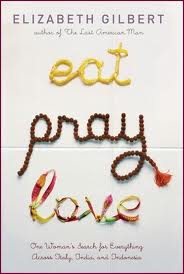
Barren in Books: Eat, Pray, Love and the Auntie Brigade


And so, inevitably, Barren in Books arrives at Eat, Pray, Love.  Elizabeth Gilbert’s bestseller came out right around the time I was grappling with my own decision about whether or not to have children, and I guess this is one of the reasons I liked it so much. Millions of other women liked it too, which, by extension must mean that even if these women had kids, the decision about whether or not to have them is something a lot of us relate to. Of course Gilbert’s book was about other things too, but it was the first book I remember reading where childlessness was laid out as a reasonable choice rather than the unfortunate outcome of being a lesbian or a spinster or -- the worst and most pitiable -- infertile. What I find most amazing about that statement is that I was thirty-five when I read the book.  THIRTY-FIVE.  At the risk of sounding immodest, I will point out that I had read rather a lot of books up until then.

In her follow-up book, Committed, Gilbert asserts that she is a happy member of the "Auntie Brigade." She even outlines a sort of defense for the necessity of this childless community of women:

In leaving no descendants ... childless aunts do tend to vanish from memory after a mere generation, quickly forgotten, their lives as transitory as butterflies. But they are vital as they live, and they can even be heroic. Even in my own family's recent history, there are stories on both sides of truly magnificent aunties who stepped in and saved the day during emergencies. Often able to accrue education and resources precisely because they were childless, these women had enough spare income and compassion to pay for lifesaving operations, or to rescue the family farm, or to take in a child whose mother had fallen gravely ill. I have a friend who calls these sorts of child-rescuing aunties "sparents"— "spare parents" — and the world is filled with them.

She goes on to establish its lineage throughout history, including Jane Austen and the childless aunts who raised Leo Tolstoy, Truman Capote, and the Brontë sisters.

As much as I liked both of Gilbert's books, the Auntie Brigade is not a sisterhood of which I particularly feel a part. For one thing my sister, my only sibling, has no children, and at forty-four -- the lesbian part is less of an impediment these days -- that is unlikely to change. My three closest childhood friends all have children but only one has daughters, and I am really only interested in the girls. It’s not just that their clothes are way cuter and the present giving opportunities are therefore much more interesting, which they are. It’s as much about the fact that little boys are alien creatures to me. In fairness they are as disinterested in me as I am in them and our engagement is usually limited to that moment at the end of my visit when their mother traps them and prods them to give me a goodbye kiss before they run screaming back to whatever fort they were building prior to capture. In short, I do not feel obligated make up for my childlessness by assuming my appointed role as the lovable, generous, if sometimes eccentric – think Auntie Mame – aunt.

And this sense of duty is the thing that bothers me just the slightest bit about the Auntie Brigade. There is a whiff of an apology, a “look at my good work in the supporting role” about the whole thing. At least this is what I wanted to argue when I started writing this blog some weeks ago.  But the truth is I started investigating college savings plans for my friends' little girls not long after I re-read this part of Gilbert's book; I guess I always did like Auntie Mame.

Other Barren in Books posts:
On Jonathan Franzen's Freedom
On Caitlin Moran's How to be a Woman

Friday, March 23, 2012

Barren in Books: Freedom, until you die in a terrible car wreck

There have been lots of non-fiction books about childlessness by choice, but Jonathan Franzen’s Freedom is the first novel I've read that features a character, Lalitha, who is childless by choice.  She shows up about halfway through the book, a twenty-something assistant in an environmental organization that finds its raison d’etre in lobbying to slow population growth.  Her fervor for the cause shows up in her proclamation that she does not want to have children, and the literary GINK (Green Inclinations, No Kids) was born.  Here she is with the book's protagonist, Walter, discussing the topic with his old friend, Richard Katz.  Walter starts:

"...We just want to make having babies more of an embarrassment.  Like smoking's an embarrassment.  Like being obese is an embarrassment.  Like driving an Escalade would be an embarrassment if it weren't for the kiddie argument.  Like living in a four-thousand-square foot house on a two-acre lot should be an embarrassment."

"'Do it if you have to,'" Lalitha said, "'but don't expect to be congratulated anymore.'  That's the message we need to spread."

Katz looked into her crackpot eyes.  "You don't want kids yourself."

"No," she said, holding his gaze.

"You're, what, twenty-five?"

"Twenty-seven."

"You might feel differently in five years.  The oven timer goes off around age thirty.  At least that's been my experience with women."

"It won't be mine," she said and widened, for emphasis, her already very round eyes.

The GINK is not a type I relate to much.  My own decision not to have children was nowhere near as principled, although at the time I longed for some kind of principle on which to offload the responsibility of that choice.  A deep-seeded belief system was attractive in the face of my amorphous ambivalence, and I guess this is why I am mildly suspicious of GINKs.  At the risk of being normative, I don’t trust that such a personal decision can be adequately addressed via any variety of dogma.

In Freedom we never get to find out if Lalitha’s childless stance lasts beyond her twenties.  Franzen dashes her into the side of a West Virginia mountain, killing her off before she gets interesting.   Prior to that Franzen doesn’t do much to enhance the reputation of the childless by choice either.  Lalitha is likable, but she also seduces her married boss, Walter, while living under the same roof with him and his wife.  Between the environmental causes and the childless stance and the affair, it wouldn't take much for a Fox News commentator to spin her into the sort of leftie home wrecker that right wing America loves to hate.  Maybe next time Franzen can make up the slight by offering us a more believable childless character.  I am thinking a DINK.  After all, money is the ultimate socially acceptable principle.

Other Barren in Books posts:
On Elizabeth Gilbert's Eat, Pray, Love and Committed
On Caitlin Moran's How to be a Woman

Friday, March 16, 2012

Who Will Take Care of You When You're Old?


willowgarage,
Flickr Creative Commons
The only scenario that has caused me real pause about my decision not to have children is thinking about old age and dying.  My husband is seven years older than me and this, as well as his gender, stack the odds in favor of me outliving him.  Chances are I will die alone.  (Yes, yes, I know we all die alone, but you know what I mean.) 

I usually don’t think about it much, but it’s hard not to when someone close to you dies as my grandmother did last December.  My mother spent much of the year traveling cross-country to her mother’s house to visit, attend doctor’s appointments and sort out financial matters.  I couldn’t help thinking there would be nobody to do the same for me. 

To cheer myself up I like to point out that having kids is no guarantee they will be there in the end.  Chances are decent they will blame you for ruining their lives, which is perhaps the least horrific of the potential outcomes -- overdose, cancer, eating disorders -- I’ve occasionally witnessed my parent-friends endure.  Overall, expectations for kids in today’s world are pretty low.  To paraphrase Chris Rock, his benchmark for doing a good job as a father is keeping his daughter “off the pole.”  Forget about expecting her to nurse him on his deathbed.

This is what I like to tell myself, although I’m not sure I really believe it.  But like all the other reasons to have kids – from missing out on an essential part of life/being a woman to reducing my chances of developing MS -- that I tried on over the several years I was pondering the decision, in the end it seemed like both a risky and drastic solution for a potential, future, or only perceived problem.  Instead, spurred on by my grandmother’s death, I had a will, trust, health care proxy, and power of attorney drawn up so that, even though there is unlikely to be family, whoever is there will know my wishes.  I also intend to take financial planning around my later years into serious consideration while I am still young enough to do something about it.  I figure with the help of the Internet and books and ideally the identification of a good caregiver, by the time I reach old age it ought to be a little less lonely.

For the last few years of her life, my grandmother was lucky enough to have, in addition to my mother, a caregiver who served as nurse, chauffeur, cook, and cleaner.  Juanita allowed my grandmother the privileges of retaining a social life, ferrying her around to assorted women’s’ clubs, and remaining in her own home until she died.  Juanita also enforced a regimen of eating and bathing my domineering grandmother would have never allowed her own daughter, my mother, to dictate.  My grandmother, a generous but emotionally cold woman with a not insignificant stubborn streak, occasionally used Juanita as a pawn to antagonize my mother.  On her deathbed my grandmother beckoned my mother with the plea she needed to tell her something important.  When my mother got close, my grandmother informed her she was not going to tell her what she had to say, but that she would tell Juanita.  The point of all this is that at the end of your life there is not only no guarantee about how your children will behave, there is also no guarantee about how you will behave.  I will concern myself with the latter.

Friday, March 9, 2012

Return of the Breeders

Last Saturday night something remarkable happened.  My husband and I had dinner with our friends who are parents.  Not the kind of dinner that is dominated by the kids -- either in the form of a tantrum, or a mini pageant in which you are expected to fawn over the child’s talent at spelling or card tricks or song, or, worst, the parents taking ceaselessly about the kids -- but an honest to goodness adult dinner.  The children, now nine and eleven, were holed up in the living room watching what seemed to be an entirely age-inappropriate movie while the grown-ups held court in the dining room.  We talked about work and books and life in general.  The only time the children came up at all is when they appeared to take a helping of dinner and return to the couch.

I remember vividly the fading and then total disappearance of this particular pair of friends.  It started with the birth of their first child, an event they were adamant would not change their lives.  It was evident this wasn’t the case when several months later we all went out to dinner, baby in tow.  Sometime after we ordered and before the appetizers I realized any attempt at conversation was futile.  The need of the nervous new parents to evaluate their infant’s well-being at thirty second intervals precluded the ability to maintain either the interest in or the linearity of a dialogue.  This was followed by a second child and a second memorable attempt at dinner, this time at their house.  We spent several hours watching their two toddlers run around the house naked, screaming at the top of their lungs, and overturning dinner plates.  The mother looked despondent.  The father looked mad at the mother.  We looked at our watches. 

But now that our parent-friends are in their forties and early fifties, it appears they are resurfacing.  The last decade was tough.  First we felt excluded.  Our old friends now only seemed to hang out with the parents of their kids’ friends.  On occasion we were invited along to such social engagements, which seemed to be a way for parents to be around other adults without any expectation of having to talk to each other since everybody was busy tending to their own kids.  This was lonely business for a non-parent.  Both the parents and we recognized this, and soon either they stopped asking or we stopped accepting such invitations.  Then we found a coping mechanism; for the past five years or so our primary friendships have been with gay men.  I had happily assumed this would be the way from here on out, but I suspect as we all get older we will regain some face-time with the parent faction.  Welcome back.  I understand why you had to be away, but I missed you while you were gone.

Thursday, February 23, 2012

Breeders vs the Barren: The Airplane

For the most part I get along just fine with kids.  I may have none of my own, but that doesn't mean I don't like them.  Other than an unintentional propensity to make infants cry, I harbor no ill will towards children.  I am generally indifferent and occasionally amused, even delighted by them.

It's the parents that are the problem.

And in the fertile battlefields of parents versus non-parents, none is more fecund than the inside of a commercial airplane.  It is the gladiators' arena of The Breeders vs. The Barren, and I was never one to shy from a fight.  It's not that I am unsympathetic to the plight of parents travelling with small children.  These days air travel is a painful experience, from the security lines to the haggling for overhead bins.  And that's all before you start hurtling yourself through the air in a metal tube filled with stale air and germs and implausible foil-covered units of nourishment.

Undoubtedly all of this is harder with kids.  But the bottom line is neither I nor any of your fellow passengers made you have that kid you now have to entertain for hours on end.  You already got special treatment in the form of early boarding -- which means airlines now, perhaps appropriately, put parenting on par with active military duty -- so please, all I ask is bring a pair of headphones for your child's game/personal DVD player/noise-making machine.

Just last week I was on a cross-country flight when I dared to make this very request of a mother of a child of about four.  I had been forced to listen to the relentlessly chipper, dog hearing-pitched jangle of the girl's animated feature from the row adjacent for about twenty minutes or so when I finally asked the flight attendant to intercede.  The mother reported back -- also via the flight attendant -- that it was either the DVD player or the screams of the child.  I was just starting to fish around in my purse for my own headphones to offer to the mother when I noticed a very angry looking older woman, presumably the grandmother, produce a pair of headphones from her own purse.  She then hissed protestations across the aisle at me that she could not hear it, so how could I?  I restrained myself from hissing back that her hearing aid must be broken and instead opted for an antagonistic smile.  Just then the presumed grandfather turned around and starting making hand gestures at me as if to suggest I should jump out of the plane.

I thought it was over, but no.  My husband was accosted by the mother when their paths crossed en route to the lavatory.  She was positive that I was using her child to get an upgrade to business class, demonstrating that what she lacked in manners she made up for with a rich fantasy life.  She then made the same jump-out-of-the-plane hand gesture at my husband before they parted ways.

And it still wasn't over.  As we left the plane, the presumed grandfather informed us that he did not appreciate my husband telling his partner, the mother, to shove off, not only proving once more what a rich fantasy life this mother had, but also that he was a dirty old man.  (Not to mention the conundrum this created over who exactly the presumed grandmother was in this triangle.  How awkward for your partner to be the same age as your mother.)

I left the plane rattled, as did husband, and reconsidering if I was an unreasonable person.  My conclusion was that, no, I am not.  When a mother has a crying child on a plane, I never give her a hard time.  I realize that mother is as upset by the crying, probably more so, than I am.  But in this case it was preventable noise, and there was no excuse.  My other conclusion was that being a parent, or even a grandparent, doesn't prevent you from being an asshole.

Wednesday, February 15, 2012

Meet the Baroness


That's me: married for ten years, thirty-nine for the second time, and childless by choice.  It took me until I was thirty-seven to finally confront my own ambivalence towards motherhood and arrive at the conclusion that it was not a foundation that would sustain me, much less my husband, through sleepless nights and chafed nipples.  

Still, I was ill at ease with my choice.  I envied those women who have motherhood emblazoned on their brain waves like manifest destiny.  I had no tangible reasons to avoid it -- a stable job, a home, a willing if not exactly enthusiastic husband -- and yet I had no urge either.  What was even more infuriating was that I didn't feel any particular passion about remaining childless.  I was on no high horse about what a crappy world it is to bring a child into or that I was saving the planet by not contributing another carbon-emitting, energy-consuming being into the cosmos.  When I held a friend's baby in my arms I would coo, enjoy the baby scent, admire the perfect peachy skin and marvel at the tiny fingernails.  And after ten minutes or so I was happy to hand him or her back.  That much has not changed.

And so each week on this blog I endeavour to explore the lighter -- and sometimes heavier -- side of choosing not to have children, starting next week with an explanation of how I got my noble title.